Out of Scale and Sight
The trees don't care what you looked like. Honestly, that's a relief.

I think a lot about the women I will never meet. All my grandmothers, whoever and whenever they were. I picture them gathered in some weird room of the undead, each one admitted on the evidence of our shared DNA. But the evidence runs out. Go back two hundred years or so and some of them may have left no trace in me at all. Go back far enough and one of their mothers wasn't quite human.
A generation or two back, I might have photographs of a few of these women. Before that, they are names in a record book. I look for them in the mirror, but that only goes skin deep.
Before photographs, a face disappeared the moment it was buried. The exact proportion of a nose, the way a mouth rested, the face you had looked at your whole life: gone, except in memory. And memory, as anyone who has tried to hold on to a face knows, is not enough.
That's why I keep coming back to the Victorian death mask: a plaster cast of a dead person's face, made in the hours after death, before the features settled into something unrecognizable. People call the Victorians obsessed with death. I think they were afraid of forgetting.
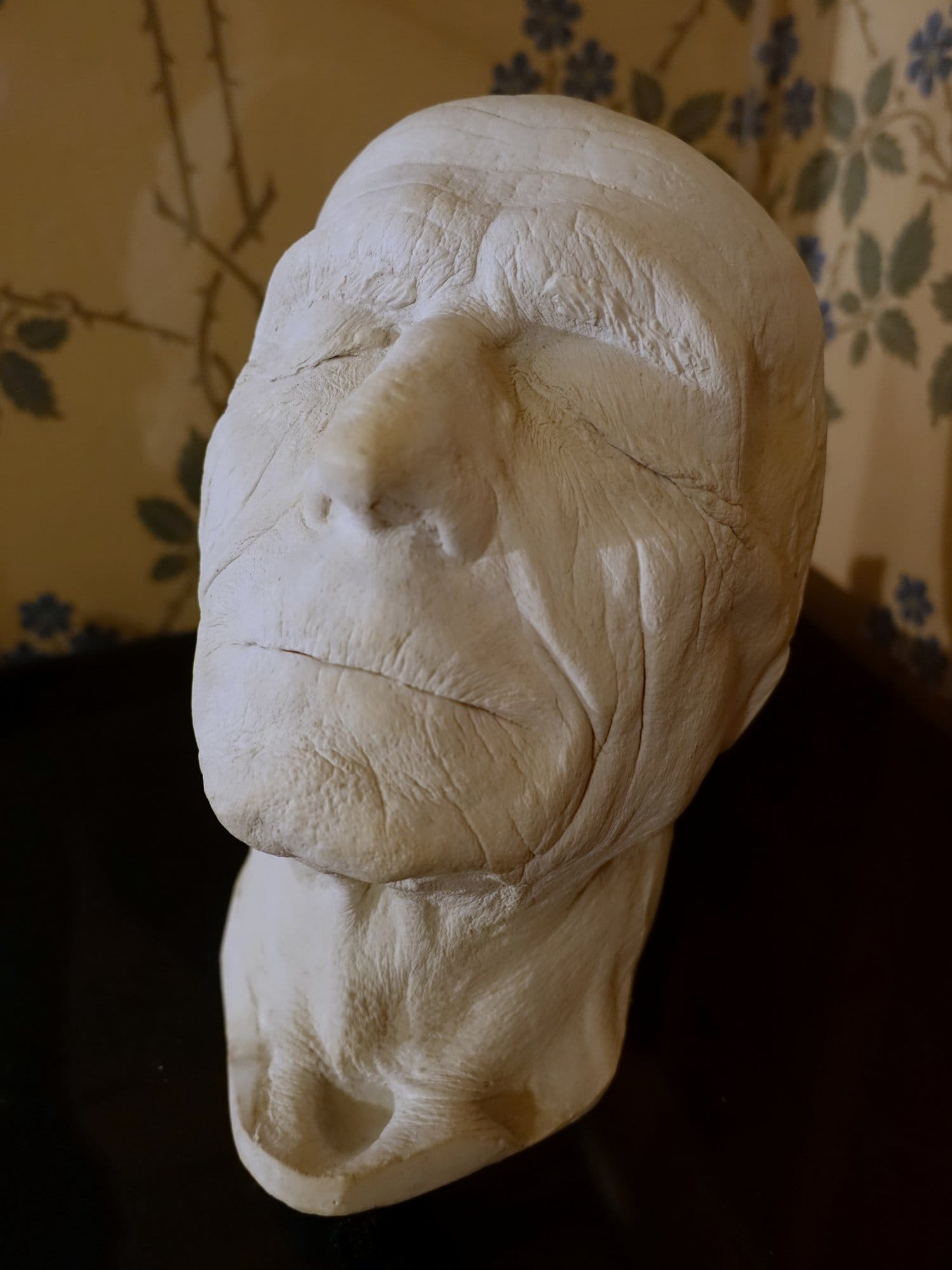
Picture the person with the plaster: a daughter who wasn't ready, a husband, a son, someone with a few hours and nothing to lean on. New grief, and a desperate wish to keep something of what they were already losing.
What I find beautiful is the honesty. No flattering angle, no soft light. A death mask shows someone's face at the moment they finished being alive: the swelling, the slack, a body that had just done what bodies do. It keeps one face at one moment.
They kept these masks on the mantel, where the family gathered, so the person stayed part of daily life. We have since handed death to an industry that happens somewhere else, so we don't have to be there. We have made forgetting easier and called it progress. I'm not sure it is.
I think they were afraid of forgetting.
Still, sitting with families at the end of a life, I see the same impulse. The death mask is now the dent in a memory foam mattress, a screensaver set to a photograph, a voice message kept on a phone for years because deleting it would feel final in a way the death somehow didn't. Different century, same love with nowhere to go. We are still making death masks, only with different materials.
But I keep thinking about a woman from much further back who had none of them. I don't have her name. I picture her in California's Yosemite Valley, one of the Ahwahneechee, grinding acorns to feed her children. She isn't my ancestor, not literally, but she is in a way: a daughter of the same land and ocean. She was probably young and probably tired, trying to remember her own mother's face with no plaster, no photograph and no record book. Maybe a rock carving. Maybe nothing.
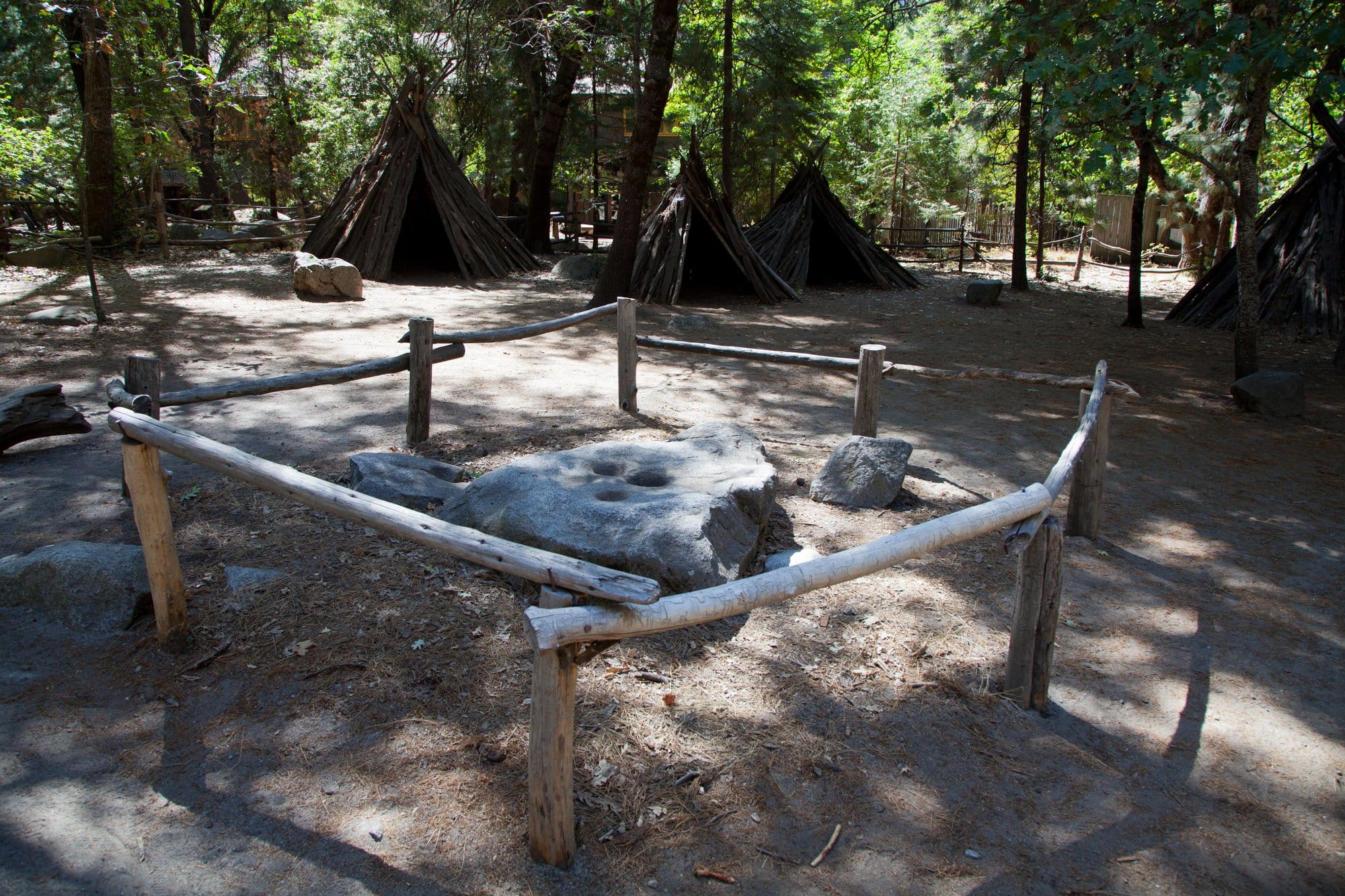
What she had instead was the forest. She lived among pines and incense cedars so big they had no human scale, and black oaks that dropped the acorns she ground. They stood for centuries before she arrived and after she was gone. I wonder what it felt like to be that small among them. She was a girl there before she became a mother. Becoming a mother remade her, and it happened too fast for a tree to notice. She got older, the way everyone does, and the forest didn't care. To the trees, she was still that girl. If they keep anything of her, they keep all of her at once, on a scale bigger than a face.
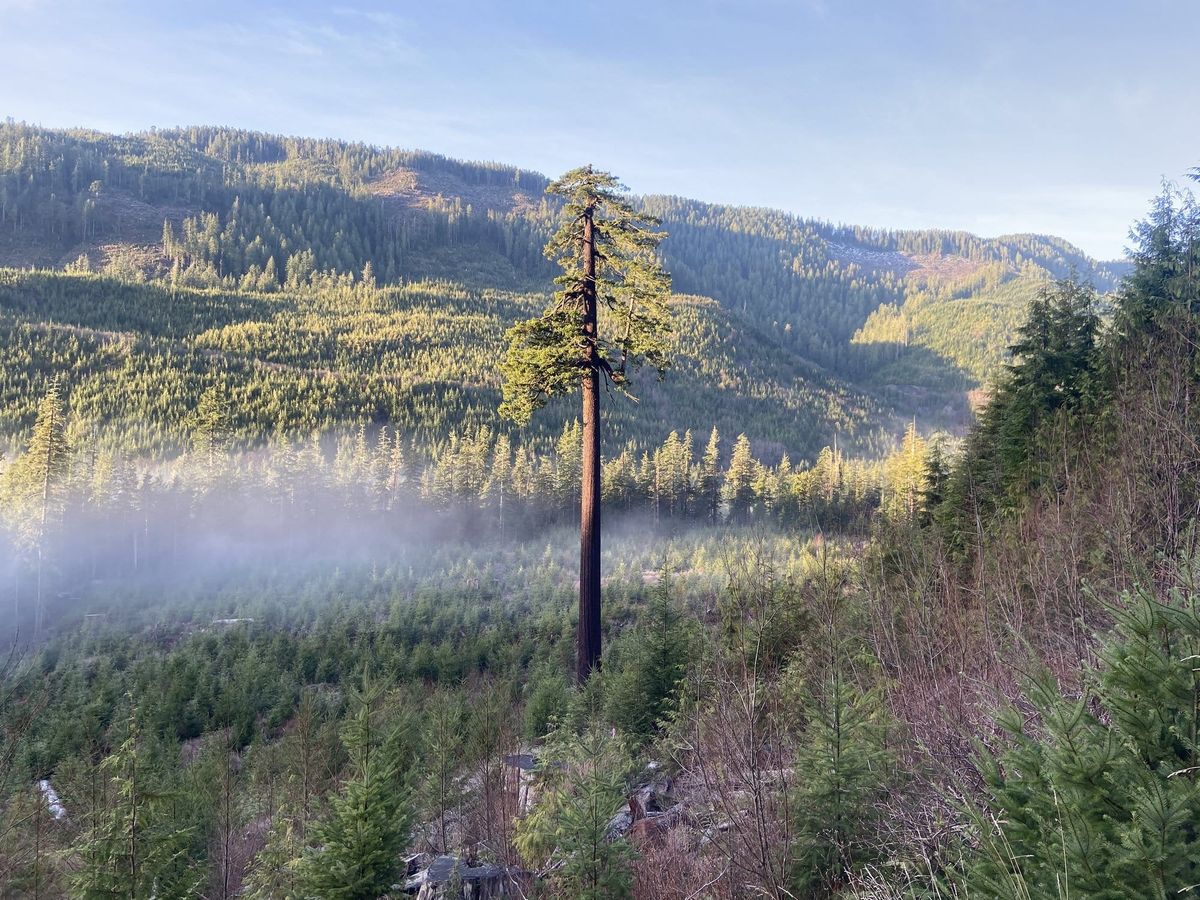
I think a lot, too, about a Douglas fir known as Big Lonely Doug, up the coast on Vancouver Island, left standing alone when the forest around it was clearcut in 2011 or so. By most estimates it is about a thousand years old, a seedling around the time I picture her grinding acorns, and it saw the whole forest go.
Bainbridge Island, where I live and work, sits between them on the map. It had its own old forest of western red cedar and Douglas fir, and the Suquamish people have lived among it for thousands of years. Then the logging came. By the early 1900s most of the old growth was gone. Today it's mostly second growth, and I can only imagine the old forest from the edge of what grew back.
To the trees, she was still that girl.
Outside my window are tall coastal firs, maybe 200 years old at most. They move in the wind in a way that looks like thinking. Eagles have roosted up there for years, though I'm still working out whether it's one family or a different eagle returning to the same spot. I doubt the firs can tell the difference. The roots go deeper than the logging did.
I will never meet the woman grinding acorns in that valley maybe a thousand years ago, and the evidence for her ran out long ago. But here on the island, under these firs, she is not lost. She is only out of scale and sight.
Death Masks of the 21st Century is a series about what we keep of a person after they die. Next week: the old stumps still feeding this forest, and what they can tell us about memory.